Tuesday, 7 May 2013

Techtextil 2013

Techtextil 2013 is just around the corner and as with all major shows we'll undoubtedly see all the latest in fibre, fabric and product development from all the big corporations.
They'll have their huge stands with comfy chairs, nice ladies serving drinks and food and lots of sales rep's who may never have met you but are your best friends, and although it's good to see whats on offer I'll be looking for the real niche producer tucked away in some dark corner away from the main thoroughfare who's got something quite unique.
One such company I've already booked a meeting with is Elasol. This company has developed a new unique shading system for greenhouses called OMBRA-DLS that incorporates an elasticated fabric that controls the light, heat and humidity inside the greenhouse automatically purely by stretching or relaxing the fabric. I'll update you on other gems that I find after the show.

Monday, 29 April 2013

Sportswear

Having recently done some work with sportswear manufacturers it occurred to me that most of these companies are starting from ex-sportsmen or women, passionate about their sport and looking to improve their kit. However a lot of these people have no experience in fabric or garment technology.
I coming from the other direction. I have nearly 30 years experience in textiles technology and only about 5 years in amateur sport, namely cycling and swimming. I want to bring to the table the best fabrics for their sport so these new companies can go to the market safe in the knowledge that what they're offering is right up there with the best if not better than their competitor.

Thursday, 18 April 2013

Wednesday, 10 April 2013

Why buy UK manufactured textiles?

30 years ago the textile trade was one of the largest industry sectors here in the UK employing over 800,000 people and a major contributor to the UK economy. However over the years hundreds of spinning mills, weaving sheds and dyehouses have closed or moved their businesses to areas where labour rates are cheaper due to the competition coming in from the Asian and Sub-Continent.
In 1999 the BBC reported that in November of that year, the Knitwear, Footwear and Apparel Trades union (KFAT) estimated that 41,000 jobs had been lost in the past year - the equivalent of one textile factory closing every day. It was also reported in the FT that the industry’s annual output in the UK had fallen to about £8bn in 2011, most of which consisting of high-tech industrial textiles for specialised uses and not clothing. You can read this article by following this link http://www.ft.com/cms/s/0/dd7c8214-29d4-11e2-9a46-00144feabdc0.html#axzz2Q4bEF7GA

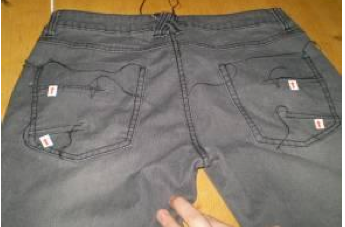
Poor workmanship
oops -
But what is the real saving in manufacturing in the Far East when a lot of the time quality drops, lead-times are extended, higher stocks have to be held, reaction times to problems are slower and products get copied?
Large companies are starting to try and move their manufacturing bases back closer to their market but are finding it difficult due to the shortage of skilled labour. An industry that used to employ generations of families is no longer there.
So what is left here? In the UK the industry is small, highly skilled, very modern and efficient. A fraction of the size it was 20 years ago but producing the highest quality fabrics at a competitive price for, mostly, specialized technical end uses. And although you will see products that look, from a distance, very similar, look carefully... Just remember "You get what you pay for" and Buy British.

.

Monday, 25 March 2013

So what is Biomimicry?


Sounds all sciency and intellectual doesn’t it? But it’s been done for hundreds of years.  Leonardo De Vinci designed a plane after studying the way birds fly in 1505, nearly 400 years before the first glider took to the skies.
The actual term comes from the Greek words “bios” meaning life, and “mimesis” meaning to imitate. So we look at life and nature around us and try to copy the best bits.

Animals, plants and insects in nature have evolved over billions of years to develop more efficient solutions, such as superhydrophobicity, self cleaning, self repair, energy conservation, drag reduction, dry adhesion, adaptive growth and so on, than comparable man-made solutions to date. Many people have solved problems by studying to understand the way nature copes with it. From swim suits and aircraft fuselage copying the way shark skin is formed and so helping improve efficiency and speed, to looking at the way termites keep their towering nests ventilated and copying this in high rise buildings to give them super-efficient ventilations systems that claim to use a 10th of the energy required to control a similar sized conventional building. There are many examples of problems that have been solved by studying the way nature deals with it.

In the field of textiles we see developments coming through all the time – 

·         The lotus effect refers to the very high water repellence (superhydrophobicity) exhibited by the leaves of the lotus flower. Dirt particles are picked up by water droplets due to a complex micro- and nanoscopic architecture of the surface, which minimizes adhesion. Some technologists have developed treatments and coatings for fabrics and other surfaces that can stay dry and clean themselves in the same way as the lotus leaf.
·         Velcro – arguably the best known of all. According to the story, George de Mestral, the Swiss inventor went for a walk in the fields with his dog. When he return, he noticed burrs stuck to his dog's fur. Upon closer inspection of the burrs, de Mestral discovered their hook-like construction, which led to his invention of the hook and loop fastener, Velcro

·         The pine cone effect- This is another example where biomimicry has been used to bring something new to the market. Working on the principle of a pine cone where it opens when in dry conditions and closes when in wet this has been applied to fibres to aid the moisture management in fabrics where there are changes in their micro-climate and therefore improving comfort for the user.


·         Shark skin – Humans are not efficient swimmers, for their shapes are not well suited to rapid travel through water. Swimming style is vital to a swimmer's speed, but beyond that, it is important to lower the skin friction drag experienced by swimmers. The movement of sharks in water, and in particular, the structure of their skin, has been of interest. The skin of most types of sharks is covered by tiny hard tooth-like three-dimensional scales, also called dermal denticles. The denticles have very fine and equi-spaced ridges and are aligned along the body axis. These tiny riblets of denticles vary in terms of number, size and shape depending on the sharks’ age and species. This lead to the ultimate focus of research studies in finding a way to imitate the surface of shark skin. Probably, the most well-known application of riblet surface morphology is in Fastskin swimwear technology (Speedo, Inc.). It was reportedly claimed that a 7.5 per cent reduction in drag would be experienced by the swimmer as a result of wearing the suit

And so the list could go on. Nature provides us with a huge amount of techniques to build with fibres to achieve specific goals, and there is tremendous potential to learn from it. Understanding the structure and function relationships is key in developing textile products that are, for example, adaptive, thermo-resistant, superhydrophobic, or self-healing, examples of which are plentiful in nature. The obvious need for sustainability requires not just mimicking natural design but also mimicking the process.

Wednesday, 20 March 2013

Technical Textiles

Technical Textiles have developed into a major growth industry worldwide, representing - in certain countries like Germany & the UK - more than 50% of textile production.
Textiles are used in nearly all aspects of industry, automotive, sportswear, aerospace, military, civil engineering, medical and the list goes on.
Take the humble car. All steel and rubber you may think but think again. Textile application include tyre cord, hose and drive belt reinforcement, thermal and sound insulation, headliners, seat upholstery, parcel shelves, carpet, trunk liners, airbags, filters, composites for body and suspension parts and there’s more.
Medical is the same and aerospace and any industry you can think of, there are countless textile applications that can be used.
We are now entering a new generation of Technical Textiles with the emergence of smart textiles or E-textiles using the latest developments in advanced flexible materials allowing the possibility of built in communications and computing devices into the fabrics allowing wearable electronics. Fabrics that release scents or essential oils for well-being. Fabrics that mimic nature and give comfort and protection against the elements without adding harmful chemicals. New ideas are coming forward all the time.

Monday, 28 January 2013

JSP Textile Solution.


With over 25 years of experience in the textile sector, JSP Textile Solutions works with clients to bring new innovative textiles to a variety of different applications.


Sectors that I'm active in are -
  • Sports / activewear
  • Smart or E-Textiles
  • PPE
  • Geotextiles
  • Healthcare
  • Military
  • Automotive
  • Aerospace
  • Industrial